
Advertisers are shifting significant budget back toward brand equity, driven by a growing recognition that short-term performance channels have hit clear limits. As Ben Harms, Chief Growth Officer at Havas Play’s Archrival, noted at the ANA Masters of Marketing conference, the industry spent years over-optimizing for immediate conversion, leaving top-of-funnel storytelling underfunded (The Current). But while brand managers celebrate the return of rich, immersive campaign executions, digital publishing engineering teams face a familiar headache: the technical drag of heavy creative assets on page performance.
The revival of high-impact visual formats—custom canvas takeovers, expandable video units, and interactive rich media—presents a structural challenge to core site health. For media operators who spent years tuning infrastructure to pass Google’s page experience signals, injecting heavy, third-party JavaScript wrappers into the critical rendering path threatens to undo hard-won operational gains, directly harming both search traffic and audience retention.
The Main-Thread Bottleneck
The primary technical conflict centers on thread management. Modern high-impact ads rely on deep execution trees: complex viewability wrappers, custom measurement scripts, high-resolution media players, and dynamic asset re-loaders. When these payloads fire synchronously or hook directly into primary document lifecycles, they occupy the browser’s main thread during critical user interactions.
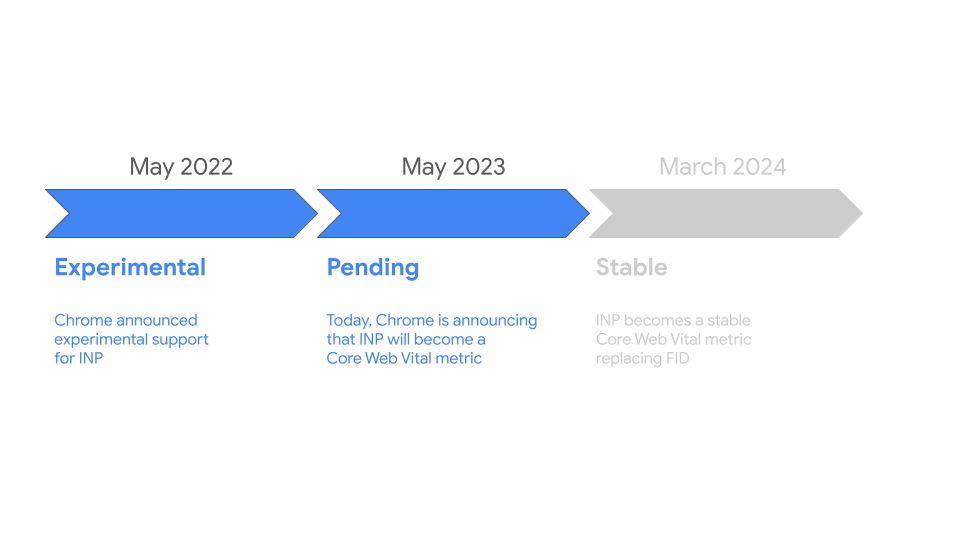
This issue intensified when Google officially replaced First Input Delay (FID) with Interaction to Next Paint (INP) as an official Core Web Vital metric (Google Search Central). Unlike FID, which only captured the initial latency of a user’s first click or tap, INP evaluates the responsiveness of all qualifying interactions throughout the entire duration of a page visit (MDN Web Docs).
According to Google’s technical documentation on INP thresholds, a site must maintain a visual response latency of 200 milliseconds or less to receive a “good” rating (web.dev). When a user taps a mobile navigation menu, scrolls through text, or attempts to open a comment thread while a third-party rich-media ad script is executing a CPU-heavy animation loop or unoptimized payload, the browser cannot process the paint update until the long task completes (LogicMonitor). The result is input lag, frame dropping, and elevated INP field scores logged directly into the Chrome User Experience Report (CrUX) (web.dev).
High-impact rich media also routinely destabilizes Largest Contentful Paint (LCP) (LogicMonitor). Heavy ad wrappers that inject un-sized DOM elements or download un-optimized image assets over the wire force late layout recalculations, delaying the rendering of primary editorial content.
Decoupling Ad Execution from the Primary Lifecycle
To support high-yield brand formats without sacrificing search visibility, session duration, and bounce rates, engineering teams must re-architect how custom creative payloads execute within the DOM. Real-world implementations across major publishers demonstrate that technical isolation and task-yielding are essential for surviving rich-media campaigns.
1. Enforcing Frame Isolation and Sandbox Architectures
Relying on direct DOM injection for custom brand units exposes the publisher’s main thread to external code over which they have little control. Modern ad architectures mitigate this by enforcing strict cross-origin iframe sandboxing or leveraging Friendly Iframes (FIF) with controlled messaging channels. By isolating ad JavaScript inside dedicated browsing contexts, script compilation and execution overhead are contained, preventing third-party vendor code from hijacking event handlers attached to the top-level window.
Major media organizations have successfully validated this architecture at scale. Engineering teams at Vox Media rebuilt their ad stack around cross-origin iframe isolation, effectively insulating the main thread from unvetted programmatic scripts and rich-media wrappers. By restricting direct DOM access, they eliminated third-party execution spikes during primary user interactions.
2. Strategic Yielding via Scheduler APIs
When custom canvas units or video wrappers must interface with the main page, ad code must be scheduled around critical browser tasks. Utilizing native APIs such as requestIdleCallback() or modern main-thread scheduling primitives like scheduler.yield() allows engineering teams to break up monolithic long tasks into smaller chunks.
Yielding control back to the browser between asset parsing and animation steps ensures user taps or keypresses are handled instantly, keeping latency safely beneath the 200-millisecond INP boundary (MDN Web Docs). Chrome’s engineering team showed how yielding long tasks with scheduler.yield() breaks up blocking operations, allowing the main thread to service user interactions without abandoning ongoing background script processing.
3. Asynchronous Header Bidding and Dynamic Container Sizing
Layout stability remains directly connected to container architecture. When high-impact ads render without pre-reserved DOM dimensions, they trigger page reflows that hurt Cumulative Layout Shift (CLS) and stall LCP progress (LogicMonitor).
Publishers must enforce strict aspect-ratio CSS container styling for custom ad slots before auction requests are issued. By reserving explicit display dimensions based on historical win rates or dynamic bid parameters, the page layout stays fixed regardless of creative dynamic sizes. Case studies from Prebid.org detail how engineering asynchronous header bidding wrappers with pre-allocated slot dimensions prevents reflow penalty, preserving user experience metrics alongside high eCPMs.
Rebalancing Revenue and Site Experience
The shift back toward brand equity presents an undeniable monetization opportunity, providing higher CPMs than standard programmatic display units. However, adopting rich media cannot come at the expense of infrastructure stability or Core Web Vitals compliance.
Digital publishers must establish clear technical parameters for incoming advertiser creative payloads—enforcing strict asset file-size limits, requiring asynchronous initialization, and isolating dynamic wrappers. By modernizing ad execution stacks to protect the main thread, media operators can capture premium brand budgets while maintaining the fast, responsive user experience that drives long-term audience engagement.
This article was generated with the help of AI.